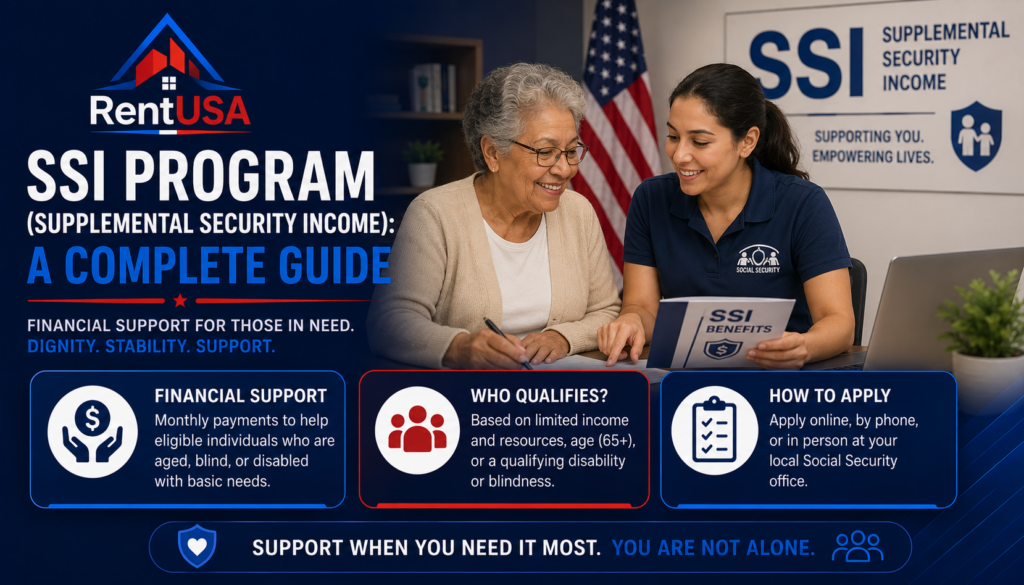
The SSI Program, or Supplemental Security Income, provides financial aid to low income individuals who are aged, blind, or disabled. As a key part of Government Assistance, SSI offers monthly benefits designed to help cover basic needs such as food and housing. This article explains how SSI generally works.
💵 What Is SSI?
Supplemental Security Income (SSI) is a federal program administered by the Social Security Administration that provides monthly cash payments to individuals who are 65 or older, blind, or disabled and who have limited income and resources. Unlike SSDI, SSI is a needs-based program and does not require a prior work history.
🎯 Purpose of the Program
SSI aims to provide a basic level of income to help meet essential needs such as food, clothing, and shelter for individuals who have limited financial resources and meet the program’s age, blindness, or disability criteria.
📋 Who May Qualify?
Age or Disability Requirements
Applicants must be at least 65 years old, or meet the SSA’s definition of blindness or disability, which applies to both adults and children.
Income and Resource Limits
SSI has strict limits on both income and countable resources, such as bank accounts and certain property, which vary based on individual or couple status.
Citizenship and Residency
Applicants generally must be U.S. citizens or meet specific noncitizen eligibility criteria and reside within the United States.
🏠 Benefits Offered
SSI provides a monthly cash payment, with the federal benefit rate adjusted periodically, and many states supplement this with additional state payments. SSI recipients often qualify automatically for Medicaid in many states.
📝 How the Application Process Generally Works
1. Submit an Application
Applications can be started online for adults, by phone, or in person at a local Social Security office.
2. Provide Financial and Medical Information
Applicants must document income, resources, and, if applying based on disability, detailed medical evidence.
3. Disability Determination, If Applicable
For applicants under 65, the SSA reviews medical evidence to determine whether the disability criteria are met.
4. Decision and Appeals
If denied, applicants have the right to appeal through reconsideration and, if necessary, a hearing before an administrative law judge.
📑 Documents Commonly Requested
Applicants are typically asked for proof of income and resources, identification, immigration or citizenship documentation, and medical records if applying based on disability.
⚠️ Common Reasons for Denial
Applications may be denied due to income or resources exceeding program limits, insufficient medical evidence for disability claims, or not meeting citizenship and residency requirements.
💡 Tips Before Applying
Applicants may benefit from gathering financial documentation and medical records before applying, reporting all income and resources accurately, and considering assistance from a disability advocate if the application is complex or previously denied.
❓ Frequently Asked Questions
Can children qualify for SSI?
Yes, children with qualifying disabilities and limited family income and resources may be eligible for SSI.
Can I receive both SSI and SSDI?
In some cases, individuals may qualify for both if their SSDI benefit amount is low enough to still meet SSI’s income limits.
Does SSI provide the same monthly amount to everyone?
No. Payment amounts can vary based on income, living arrangements, and state supplemental payments where applicable.
Where Can You Learn More About This Program? 📌
If you would like additional information about this assistance program, eligibility requirements, application procedures, or current updates, you should consult the official source.
Learn more by visiting the official website: