The Medicaid Program provides essential healthcare assistance to millions of low income individuals and families across the United States. As a major form of Government Assistance, Medicaid offers health coverage that can significantly reduce out-of-pocket medical costs. This article explains how Medicaid generally works and who may qualify.
🏥 What Is Medicaid?
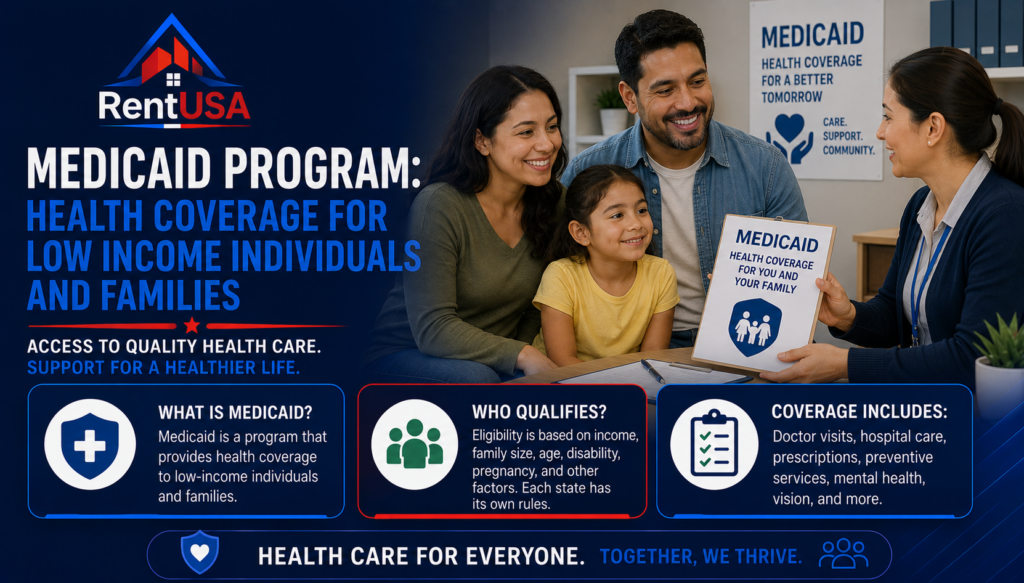
Medicaid is a joint federal and state program that provides health coverage to eligible low-income individuals, including children, pregnant women, elderly adults, and people with disabilities. While Medicaid follows federal guidelines, each state administers its own program, meaning specific eligibility rules and covered services can vary.
🎯 Purpose of the Program
Medicaid aims to ensure that low-income individuals and families have access to necessary medical care, including preventive services, hospital care, and long-term care, without facing prohibitive costs.
📋 Who May Qualify?
Income Requirements
Eligibility is generally based on household income compared to federal poverty guidelines, with limits varying by state and eligibility category.
Categorical Eligibility
Certain groups, such as pregnant women, children, and individuals with disabilities, may qualify under specific eligibility categories with different income thresholds.
Residency and Citizenship
Applicants generally must reside in the state where they apply and have U.S. citizenship or an eligible immigration status.
Medicaid Expansion States
In states that adopted Medicaid expansion, eligibility may extend to a broader range of low-income adults based primarily on income.
💊 Benefits Offered
Medicaid typically covers doctor visits, hospital care, laboratory and X-ray services, preventive care, prescription drugs, and in many cases, long-term care services. Some states offer additional benefits beyond the federally required minimum.
📝 How the Application Process Generally Works
1. Apply Through the State Medicaid Agency
Applications can typically be submitted online through the state Medicaid agency or the Health Insurance Marketplace, by mail, or in person.
2. Provide Documentation
Applicants are generally asked for proof of income, identification, and household information.
3. Eligibility Determination
States review applications to confirm eligibility based on income and category-specific requirements.
4. Coverage Start Date
Once approved, coverage may begin immediately or retroactively, depending on state rules and circumstances.
🔄 Renewal Requirements
Medicaid recipients are generally required to renew their coverage periodically, often annually, by confirming continued income eligibility.
⚠️ Common Reasons for Denial
Applications may be denied due to income exceeding state limits, incomplete documentation, or not meeting citizenship or residency requirements.
💡 Tips Before Applying
Applicants may benefit from gathering income and identification documents in advance, checking their specific state’s income limits since these vary, and responding promptly to any requests for additional information during the review process.
❓ Frequently Asked Questions
Is Medicaid the same as Medicare?
No. Medicaid is primarily based on income and serves low-income individuals of any age, while Medicare is primarily based on age or disability status and is not income-restricted in the same way.
Can working individuals qualify for Medicaid?
Yes, particularly in states that have expanded Medicaid, many working individuals with low income may qualify.
Does Medicaid cover all medical expenses?
Coverage varies by state and category, and while Medicaid covers a broad range of services, some costs or services may not be included depending on the state’s specific program.
Where Can You Learn More About This Program? 📌
If you would like additional information about this assistance program, eligibility requirements, application procedures, or current updates, you should consult the official source.
Learn more by visiting the official website: