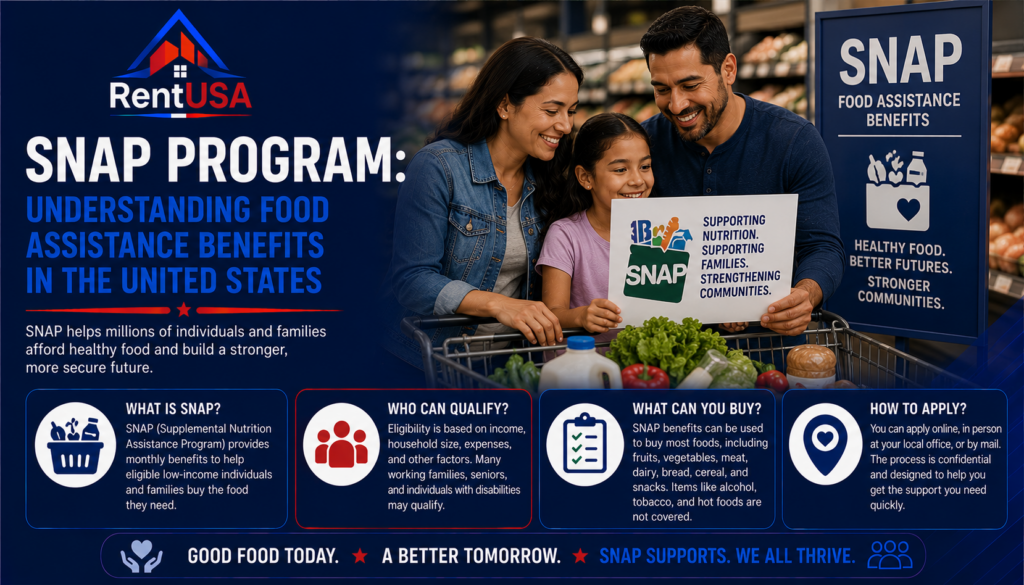
The SNAP Program is one of the largest forms of food assistance in the country, helping millions of low income individuals and families afford groceries. As a key part of Government Assistance in the United States, SNAP offers monthly benefits that can be used to purchase eligible food items, and understanding its eligibility requirements can help households determine if this federal program may apply to them.
🛒 What Is SNAP?
The Supplemental Nutrition Assistance Program (SNAP), formerly known as food stamps, is a federal program administered by the USDA and operated by state agencies. SNAP provides eligible households with a monthly benefit loaded onto an Electronic Benefits Transfer (EBT) card, which can be used to purchase approved food items at authorized retailers.
🎯 Purpose of the Program
SNAP is designed to reduce food insecurity and improve nutrition among low-income households by supplementing their food budget. The program aims to ensure that individuals and families can access an adequate and nutritious diet.
📋 Who May Qualify?
Income Requirements
Eligibility is generally based on gross and net household income compared to federal poverty guidelines, along with household size.
Resource Limits
Some households must also meet limits on countable resources, such as bank account balances, though many states have simplified or eliminated strict asset tests.
Work Requirements
Able-bodied adults without dependents may be subject to work or work-training requirements to maintain eligibility.
Citizenship Requirements
SNAP generally requires U.S. citizenship or an eligible immigration status for at least one household member.
🍎 Benefits Offered
SNAP benefits are loaded monthly onto an EBT card and can be used to purchase most food items, including fruits and vegetables, meat and dairy, bread and cereals, and seeds or plants to grow food. Benefit amounts are based on household size and income, and are recalculated periodically.
📝 How the Application Process Generally Works
1. Submit an Application
Applications are typically submitted through the state SNAP agency, often available online, by mail, or in person.
2. Provide Documentation
Applicants are usually asked for proof of identity, income, household expenses, and residency.
3. Interview
Most states require an interview, which may be conducted by phone or in person, as part of the eligibility determination process.
4. Eligibility Determination
States generally aim to process applications and issue a decision within 30 days, with expedited processing available for households with very low income or resources.
🔄 Renewal Requirements
SNAP recipients are required to periodically recertify their eligibility, typically every six to twelve months, by submitting updated income and household information.
⚠️ Common Reasons for Denial
Applications may be denied due to income exceeding limits, failure to complete the required interview, missing documentation, or not meeting work requirements where applicable.
💡 Tips Before Applying
Applicants may benefit from gathering pay stubs and expense documentation in advance, responding promptly to any requests from the caseworker, and reporting income or household changes promptly to avoid overpayment issues.
❓ Frequently Asked Questions
Can SNAP benefits be used to buy hot or prepared food?
Generally no, though some states have specific exceptions, such as the Restaurant Meals Program for elderly, disabled, or homeless individuals.
Do I need to be unemployed to qualify for SNAP?
No. Many working households with low income also qualify for SNAP benefits.
Does SNAP guarantee a specific benefit amount?
No. Benefit amounts are calculated individually based on household size, income, and expenses, and are not guaranteed to be the same for every household.
Where Can You Learn More About This Program? 📌
If you would like additional information about this assistance program, eligibility requirements, application procedures, or current updates, you should consult the official source.
Learn more by visiting the official website: