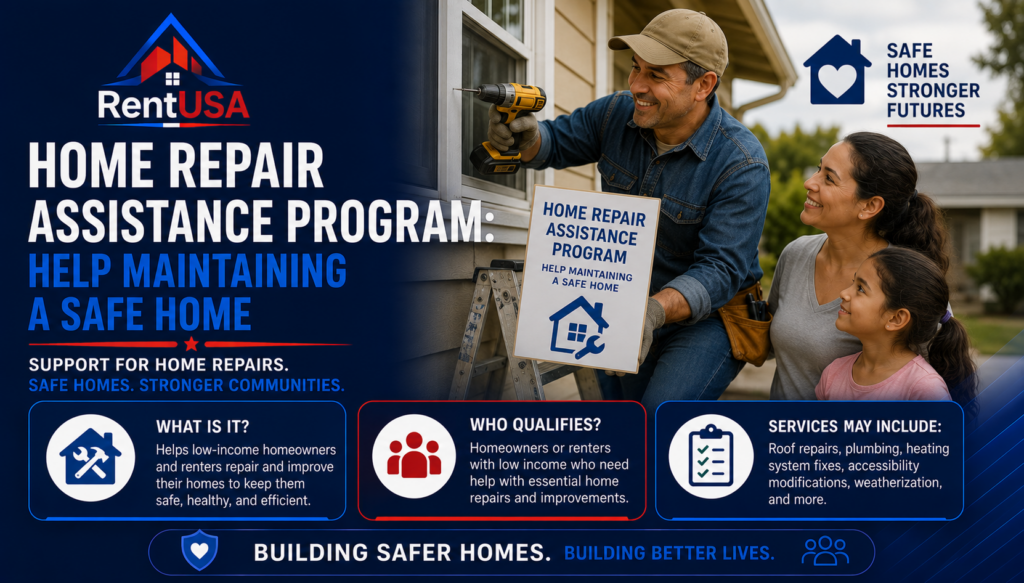
The Home Repair Assistance Program helps low income homeowners maintain safe, livable homes through Government Assistance and financial aid resources. As part of broader Housing Assistance efforts, these programs address necessary repairs that many households could not otherwise afford. This article explains how home repair assistance generally works.
🔨 What Is Home Repair Assistance?
Home repair assistance programs provide grants, low-interest loans, or direct repair services to eligible homeowners, helping address issues such as structural damage, roofing problems, plumbing or electrical hazards, and accessibility modifications. These programs are often administered through USDA Rural Development, HUD-funded state and local programs, and nonprofit organizations.
🎯 Purpose of the Program
These programs aim to help homeowners address health and safety hazards, improve energy efficiency, and support aging in place for seniors and individuals with disabilities, ultimately helping households avoid displacement due to unsafe housing conditions.
📋 Who May Qualify?
Income Requirements
Eligibility is generally based on household income falling below a set threshold, often tied to area median income limits.
Homeownership Status
Applicants typically must own and occupy the home as their primary residence.
Property Location
Some programs, such as USDA home repair grants, are limited to homes located in eligible rural areas.
Special Populations
Certain programs prioritize elderly homeowners, individuals with disabilities, or veterans.
🏚️ Types of Repairs Commonly Covered
Assistance often covers roof repair or replacement, plumbing and electrical system repairs, heating system repairs, accessibility modifications such as ramps or grab bars, and in some cases, weatherization improvements to reduce energy costs.
📝 How the Application Process Generally Works
1. Identify the Right Program
Homeowners should determine whether USDA, a state or local housing agency, or a nonprofit organization administers repair assistance in their area.
2. Submit an Application
Applications typically require proof of income, proof of homeownership, and details about the needed repairs.
3. Home Inspection
Many programs conduct a home inspection to assess the scope of necessary repairs and confirm eligibility.
4. Approval and Repair Work
Once approved, repairs may be completed by program-affiliated contractors or through disbursed grant or loan funds.
📑 Documents Commonly Requested
Applicants are generally asked for proof of income, proof of homeownership such as a deed or property tax statement, and identification.
⚠️ Common Reasons for Denial
Applications may be denied due to income exceeding program limits, property location outside an eligible service area, or the type of repair falling outside the program’s scope.
💡 Tips Before Applying
Homeowners may benefit from documenting the repair need with photos, gathering proof of income and homeownership in advance, and contacting multiple local agencies, since eligibility criteria and available funding can vary between programs.
❓ Frequently Asked Questions
Are home repair grants only available to homeowners, or can renters apply?
These programs are generally limited to homeowners, since repairs are made to owned property.
Is home repair assistance available nationwide?
Availability varies by program; some, like certain USDA grants, are limited to rural areas, while others are offered more broadly through state and local agencies.
Does approval guarantee full funding for all needed repairs?
No. Funding amounts and the scope of covered repairs vary by program and available budget, and full funding is not guaranteed.
Where Can You Learn More About This Program? 📌
If you would like additional information about this assistance program, eligibility requirements, application procedures, or current updates, you should consult the official source.
Learn more by visiting the official website: