Government Assistance through the TANF Program helps low income families across the United States meet basic needs while working toward greater financial stability. This federal program provides temporary financial aid and support services to eligible households with children, and understanding its eligibility rules can help families determine whether this type of benefits may apply to their situation.
👨👩👧 What Is TANF?
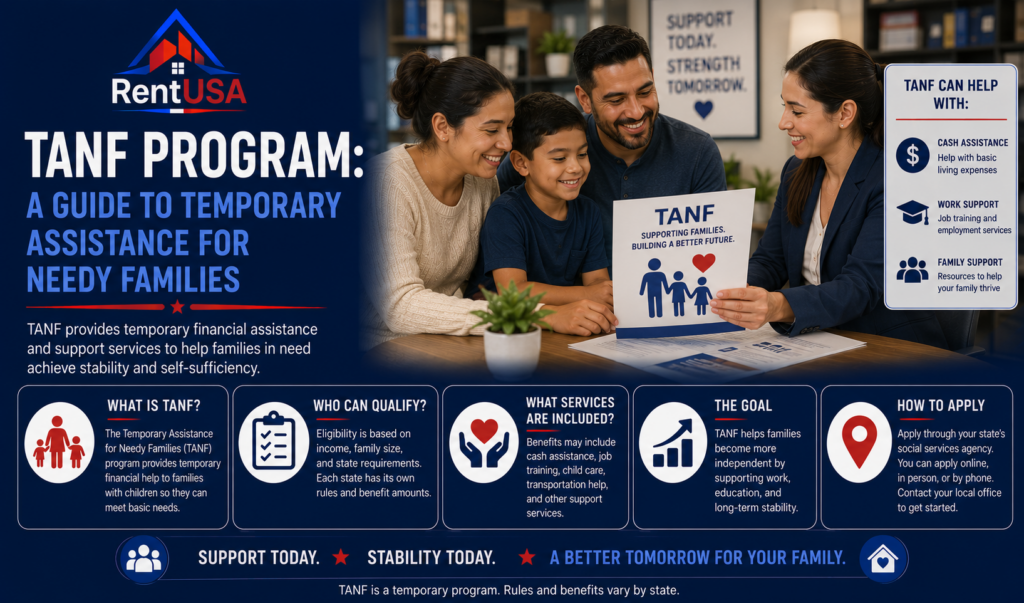
Temporary Assistance for Needy Families (TANF) is a federal program that provides block grants to states, which in turn design and administer their own cash assistance and support programs for low-income families with children. TANF is intended to be temporary, helping families bridge financial gaps while promoting work and self-sufficiency.
Because each state operates its own TANF program under federal guidelines, benefit amounts, time limits, and specific requirements can vary considerably from one state to another.
🎯 Purpose of the Program
TANF was created to provide financial support to families in need, reduce dependency on government benefits by promoting work, prevent and reduce out-of-wedlock pregnancies, and encourage the formation of two-parent families. States use TANF funds not only for direct cash assistance but also for job training, child care support, and other family services.
📋 Who May Qualify?
Income and Resource Limits
Eligibility is generally based on household income and resources falling below state-specific limits, which are typically tied to family size.
Household Composition
TANF is primarily designed for families with dependent children, though pregnant women may also qualify in many states.
Work Requirements
Most states require adult recipients to participate in work activities, job training, or education programs as a condition of continued eligibility.
Residency
Applicants must generally reside in the state where they are applying for benefits.
💵 Benefits Offered
TANF benefits commonly include monthly cash assistance to help cover housing, food, and other basic needs; child care assistance for parents who are working or in training; job readiness and employment services; and in some states, transportation assistance. The exact combination of benefits depends on the state administering the program.
📝 How the Application Process Generally Works
1. Contact the State Agency
Applications are submitted through the state or county human services agency responsible for administering TANF.
2. Provide Documentation
Applicants are typically asked for proof of identity, income, residency, and information about household members.
3. Interview and Assessment
Many states require an interview to assess eligibility and discuss work or training requirements.
4. Ongoing Compliance
Recipients are usually required to periodically report income changes and meet work participation requirements to maintain benefits.
⏳ Time Limits and Renewal
Federal law generally limits TANF cash assistance to a maximum of 60 months (five years) over a person’s lifetime, though some states impose shorter limits. Certain exemptions may apply for specific circumstances. Renewal typically requires periodic recertification of income and household information.
💡 Tips Before Applying
Applicants may benefit from gathering all required documents in advance, understanding their state’s specific work requirements, and contacting their local human services office directly to confirm current eligibility guidelines, since rules can change and vary widely between states.
❓ Frequently Asked Questions
Is TANF the same in every state?
No. While TANF is federally funded, each state designs its own program structure, benefit levels, and eligibility criteria within federal guidelines.
Can I receive TANF and SNAP at the same time?
In many cases, households receiving TANF may also qualify for other assistance such as SNAP, though eligibility for each program is determined separately.
Does TANF guarantee ongoing support?
No. TANF is intended as temporary assistance, and continued eligibility depends on meeting program requirements and staying within time limits.
Where Can You Learn More About This Program? 📌
If you would like additional information about this assistance program, eligibility requirements, application procedures, or current updates, you should consult the official source.
Learn more by visiting the official website: