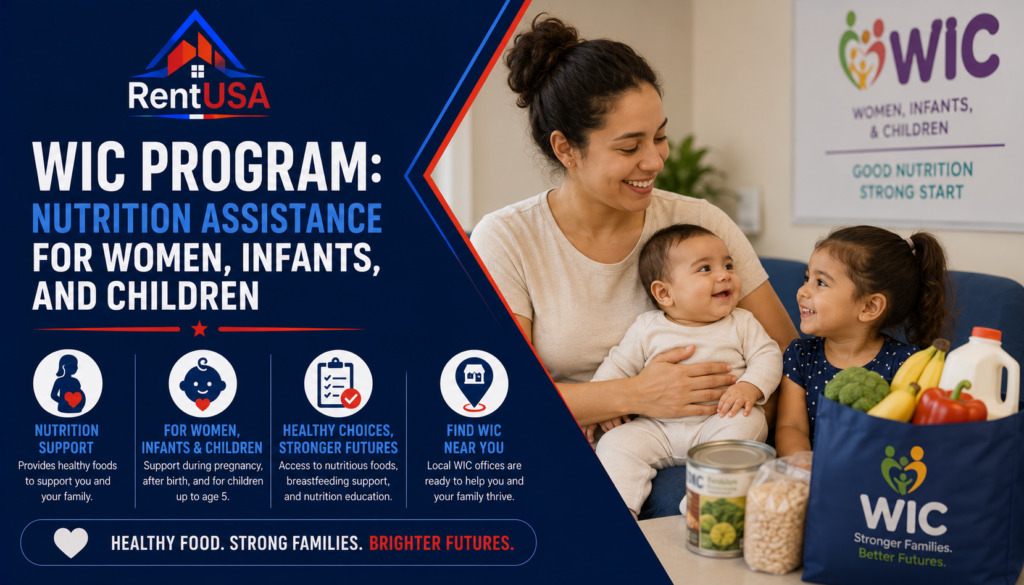
The WIC Program is a well-known form of federal program support that helps pregnant women, new mothers, and young children access nutritious food. As part of broader Government Assistance efforts, WIC plays an important role in supporting family health, and this article explains its eligibility guidelines and how the program generally works.
🍼 What Is WIC?
The Special Supplemental Nutrition Program for Women, Infants, and Children (WIC) is a federal program administered by the U.S. Department of Agriculture (USDA) and operated at the state level. WIC provides nutrition education, healthy food benefits, breastfeeding support, and referrals to healthcare and other social services for eligible participants.
🎯 Purpose of the Program
WIC was created to safeguard the health of low-income pregnant, postpartum, and breastfeeding women, infants, and children up to age five who are at nutritional risk. The program aims to improve health outcomes during critical periods of growth and development by ensuring access to nutritious foods.
📋 Who May Qualify?
Categorical Eligibility
WIC is available to pregnant women, women up to six months postpartum, breastfeeding women up to the infant’s first birthday, infants, and children up to their fifth birthday.
Income Requirements
Applicants generally must have household income at or below a state-set limit, often based on federal poverty guidelines. Households already participating in certain other benefit programs, such as Medicaid or SNAP, may be automatically income-eligible.
Nutritional Risk
A healthcare professional or WIC staff member typically evaluates whether the applicant has a nutritional risk, such as a medical condition or inadequate diet, which is a required part of eligibility.
Residency
Applicants generally must reside in the state where they apply.
🥦 Benefits Offered
WIC benefits typically include vouchers or an electronic benefit card for specific nutritious foods such as milk, whole grains, fruits, vegetables, and infant formula; nutrition education and counseling; breastfeeding support; and referrals to healthcare providers and other assistance programs.
📝 How the Application Process Generally Works
1. Locate a Local WIC Clinic
WIC is administered through local clinics, which may be run by health departments or community organizations.
2. Schedule an Appointment
Applicants typically schedule an appointment where eligibility is assessed in person.
3. Provide Documentation
Common documents requested include proof of identity, proof of residency, proof of income (unless automatically eligible through another program), and proof of pregnancy or the child’s age.
4. Nutritional Assessment
A brief health and nutrition screening is generally conducted to determine risk factors.
5. Certification and Benefit Issuance
Once approved, participants receive benefits for a certification period, after which renewal is required.
🔄 Renewal Requirements
WIC certification periods vary depending on the participant category. Pregnant women are typically certified through pregnancy and a postpartum period, while children may need to be recertified periodically until age five.
💡 Tips Before Applying
Applicants may find it helpful to bring identification and income documentation to their appointment, ask their healthcare provider for relevant medical information in advance, and contact the local WIC office to confirm required documents, since requirements can vary by state.
❓ Frequently Asked Questions
Can working families qualify for WIC?
Yes. Eligibility is based on income and nutritional risk, not employment status, so many working families may qualify.
Is WIC only for mothers?
No. WIC also serves infants and children up to age five, in addition to pregnant, postpartum, and breastfeeding women.
Does WIC replace SNAP benefits?
No. WIC and SNAP are separate programs with different eligibility rules, and households may potentially qualify for both.
Where Can You Learn More About This Program? 📌
If you would like additional information about this assistance program, eligibility requirements, application procedures, or current updates, you should consult the official source.
Learn more by visiting the official website: