Low Income Housing Programs form a core part of Housing Assistance in the United States, helping qualifying households access safe and affordable homes. Backed by Government Assistance at the federal and state level, these programs offer a range of benefits to low income renters and, in some cases, homebuyers. This article provides an overview of how these programs generally work.
🏠 What Are Low Income Housing Programs?
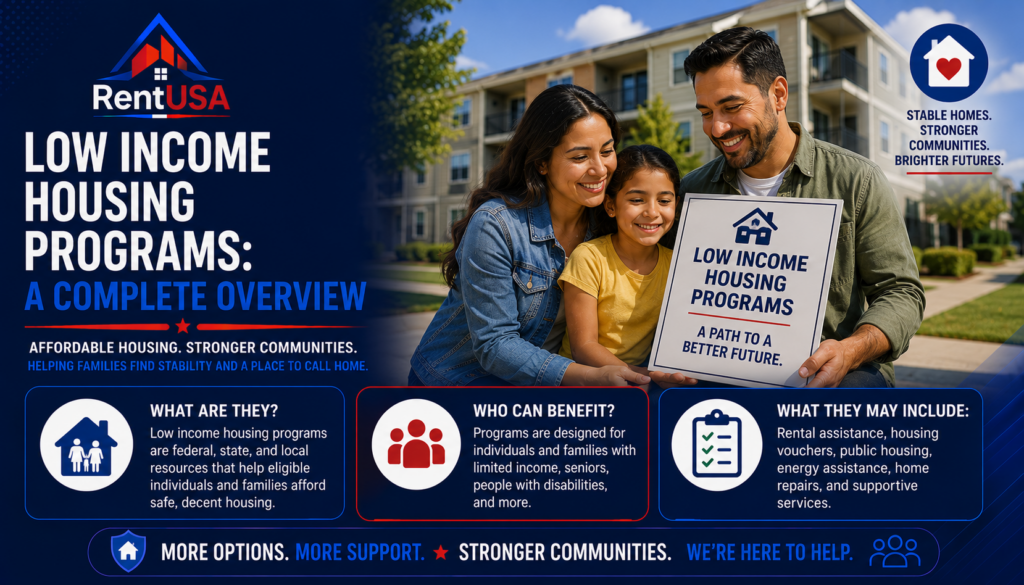
Low income housing programs encompass a variety of federal, state, and local initiatives that help reduce housing costs for households below certain income thresholds. These programs are largely coordinated through HUD and local Public Housing Authorities, though many are also supported by state housing finance agencies and nonprofit organizations.
🎯 Purpose of the Program
These initiatives aim to ensure that low-income households have access to decent, safe, and affordable housing, reducing the risk of housing instability, overcrowding, or homelessness. Many programs also connect residents with supportive services to promote broader economic stability.
📋 Who May Qualify?
Income Requirements
Eligibility is generally based on income falling below a percentage of the Area Median Income, often categorized as extremely low, very low, or low income.
Household Composition
Income limits and unit sizes are typically adjusted for household size.
Citizenship and Residency
Federally funded programs generally require that at least one household member be a U.S. citizen or have eligible immigration status, and applicants typically apply through the housing authority serving their area.
🏘️ Types of Low Income Housing Assistance
Options commonly include public housing developments managed by local housing authorities, Housing Choice Vouchers usable in the private rental market, Low-Income Housing Tax Credit properties, and Section 202 or Section 811 housing for seniors and individuals with disabilities.
📝 How the Application Process Generally Works
1. Locate the Local Housing Authority
Applications typically begin with the Public Housing Authority serving the city or county where the applicant wants to live.
2. Submit an Application
Applicants provide information about income, household members, and current housing situation.
3. Waiting List Placement
Because demand for low income housing often exceeds supply, applicants are typically placed on a waiting list.
4. Eligibility Verification
When reached on the waiting list, households undergo a detailed review to confirm continued eligibility.
📑 Documents Commonly Requested
Applicants are generally asked for identification, proof of income, Social Security numbers for household members, and proof of current address.
⚠️ Common Reasons for Denial
Applications may be denied due to income exceeding program limits, incomplete documentation, or issues identified during background or rental history screening, depending on the specific program’s policies.
💡 Tips Before Applying
Applicants may benefit from applying to multiple housing authorities where waiting lists are open, keeping documentation current while on a waiting list, and promptly reporting any changes in income or household composition.
🔗 Other Related Government Programs
Households interested in low income housing may also want to explore related benefits such as utility assistance and emergency rental assistance, which can complement long-term housing support.
❓ Frequently Asked Questions
How long are waiting lists for low income housing?
Wait times vary widely by location and program, and can range from several months to multiple years due to high demand.
Can I apply to more than one housing authority at once?
In most cases, yes, applicants can apply to multiple housing authorities to increase their chances, though rules vary by agency.
Does eligibility guarantee immediate housing?
No. Meeting eligibility requirements places an applicant on a waiting list but does not guarantee immediate placement.
Where Can You Learn More About This Program? 📌
If you would like additional information about this assistance program, eligibility requirements, application procedures, or current updates, you should consult the official source.
Learn more by visiting the official website: