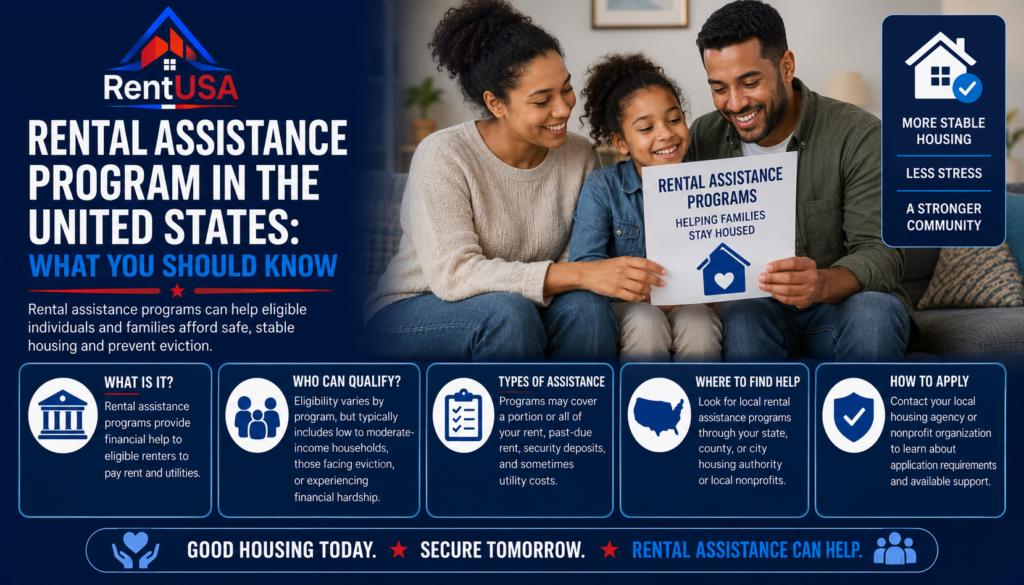
Many households across the United States search for help paying rent during periods of financial hardship.
A combination of Government Assistance, nonprofit support, and local programs can offer financial aid to low income renters facing difficulty covering monthly housing costs.
🏘️ What Kind of Help Is Available for Paying Rent?
Rent assistance resources generally fall into a few categories: federal and state rental assistance programs, emergency rental assistance for short-term hardship, nonprofit and charitable rent support, and utility or related bill assistance that can free up income for rent. Together, these resources form a broader safety net for renters experiencing financial strain.
🎯 Purpose of Rent Assistance Programs
These programs aim to prevent eviction, reduce homelessness, and help households remain stably housed during temporary or ongoing financial hardship. Assistance may address a single missed payment or provide longer-term support depending on the administering program.
📋 Who May Qualify?
Income Requirements
Eligibility typically depends on household income relative to the Area Median Income, with many programs prioritizing extremely low and very low-income households.
Demonstrated Need
Some programs require evidence of financial hardship, such as job loss, reduced work hours, medical expenses, or a formal eviction notice.
Residency
Applicants generally must reside in the jurisdiction administering the specific program.
💰 Types of Rent Assistance
Options commonly available include emergency rental assistance programs that cover a set number of months of rent, housing choice vouchers that provide ongoing monthly support, one-time grants from local nonprofits or religious organizations, and mediation or legal aid services that can help renters negotiate payment plans with landlords.
📝 How the Application Process Generally Works
1. Identify the Right Program
Renters should determine whether they need short-term emergency help or longer-term ongoing assistance, since these are often administered by different agencies.
2. Gather Documentation
Common requirements include proof of income, a copy of the lease, proof of the rent amount owed, and identification for household members.
3. Submit an Application
Applications are often submitted through local housing authorities, community action agencies, or online statewide portals.
4. Review and Payment
Once approved, funds are frequently paid directly to the landlord on behalf of the tenant.
📑 Documents Commonly Requested
Applicants are typically asked to provide a valid photo ID, proof of income for all household members, a copy of the current lease agreement, and documentation of the hardship, such as a layoff notice or medical bill.
⚠️ Common Reasons for Denial
Requests may be denied due to incomplete applications, income above program limits, lack of available funding, or failure to provide requested documentation within program deadlines.
💡 Tips Before Applying
Renters may benefit from applying as early as possible, since funds for many emergency programs are limited, keeping communication open with their landlord while an application is pending, and reaching out to local 211 helplines or community action agencies, which often coordinate multiple resources in one place.
❓ Frequently Asked Questions
Can I get help paying rent more than once?
Some programs allow renewed assistance, particularly ongoing voucher programs, while emergency assistance is often limited to a set number of months or a one-time grant, depending on funding.
Do I need to already be behind on rent to qualify?
Not always. Some programs offer preventive assistance before a renter falls behind, while others specifically require proof of unpaid rent.
Is rent assistance considered taxable income?
Rules can vary, and renters with specific tax questions should consult a qualified tax professional, since this article does not provide legal or tax advice.
Where Can You Learn More About This Program? 📌
If you would like additional information about this assistance program, eligibility requirements, application procedures, or current updates, you should consult the official source.
Learn more by visiting the official website: