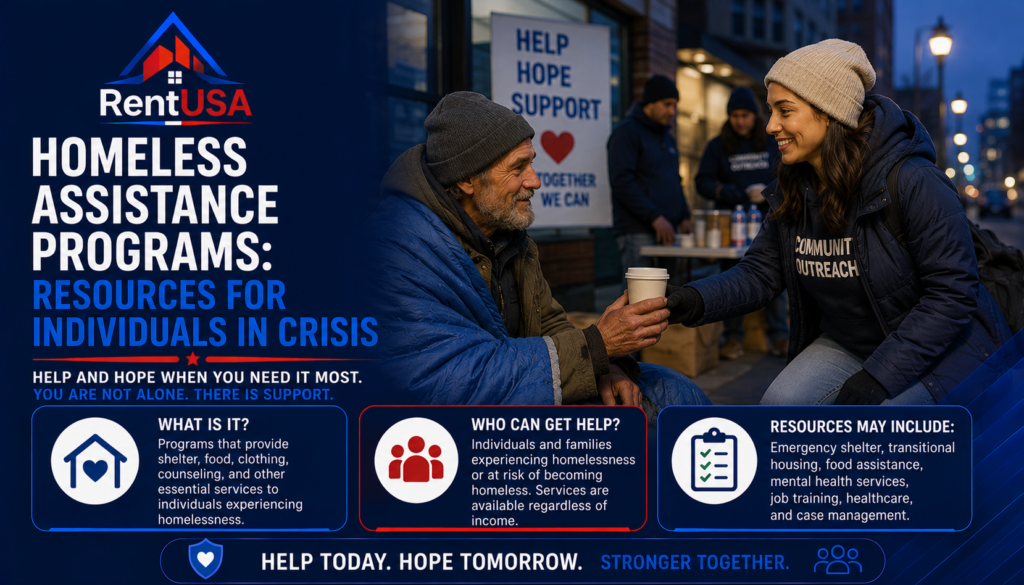
Homeless Assistance Programs provide critical support to individuals and families experiencing homelessness across the United States. As part of broader Housing Assistance and Government Assistance networks, these programs connect people to shelter, services, and pathways toward permanent housing. This article outlines how homeless assistance generally works.
🏚️ What Are Homeless Assistance Programs?
Homeless assistance programs encompass a range of services funded through HUD’s Continuum of Care program, along with state and local resources and nonprofit organizations. These programs address immediate safety needs, such as emergency shelter, as well as longer-term solutions like rapid re-housing and permanent supportive housing.
🎯 Purpose of the Program
These programs aim to reduce homelessness by providing immediate safety, addressing underlying barriers to housing stability, and connecting individuals with mainstream resources such as healthcare, employment services, and benefits programs.
📋 Who May Qualify?
Homeless Status
Eligibility generally requires meeting HUD’s definition of homelessness, which can include living in a shelter, a place not meant for habitation, or facing imminent loss of housing.
Special Populations
Many programs prioritize or specifically serve veterans, youth, families with children, survivors of domestic violence, and individuals with chronic health conditions.
Chronic Homelessness Criteria
Certain permanent supportive housing programs are reserved for individuals who meet HUD’s definition of chronic homelessness, involving a lengthy or repeated history of homelessness combined with a disabling condition.
🏠 Types of Homeless Assistance
Services commonly include emergency shelter, rapid re-housing programs combining short-term rental assistance with housing search support, permanent supportive housing pairing long-term rental assistance with case management, and street outreach programs connecting unsheltered individuals to services.
📝 How the Application Process Generally Works
1. Access Coordinated Entry
Most communities use a Coordinated Entry system as the standard entry point for homeless services, helping match individuals to the appropriate level of assistance.
2. Complete an Assessment
A standardized assessment tool is generally used to evaluate housing needs and vulnerability.
3. Program Referral
Based on the assessment, individuals may be referred to shelter, rapid re-housing, or supportive housing programs, depending on availability.
4. Ongoing Case Management
Many programs include case management services to help individuals work toward stable housing and self-sufficiency.
📑 Documents Sometimes Requested
While requirements can be flexible for people experiencing homelessness, programs may request identification when available, documentation of homelessness history, and information related to any qualifying disability or veteran status.
💡 Tips Before Seeking Assistance
Individuals may benefit from contacting a local Coordinated Entry access point or calling 211 to identify available resources, being open with intake staff about their specific needs and circumstances, and following up regularly with assigned caseworkers.
🔗 Other Related Government Programs
Individuals seeking homeless assistance may also benefit from related benefits such as SSI, Medicaid, and SNAP, which can support broader stability alongside housing services.
❓ Frequently Asked Questions
Do I need identification to access emergency shelter?
Many emergency shelters have low barriers to entry and can assist individuals even without identification, though requirements vary by provider.
Is permanent supportive housing available to everyone experiencing homelessness?
No. Permanent supportive housing is typically reserved for individuals meeting specific vulnerability or chronic homelessness criteria due to limited availability.
Does seeking assistance guarantee immediate housing?
No. While emergency shelter may be available quickly, longer-term housing programs often involve waiting periods based on availability and assessed need.
Where Can You Learn More About This Program? 📌
If you would like additional information about this assistance program, eligibility requirements, application procedures, or current updates, you should consult the official source.
Learn more by visiting the official website: