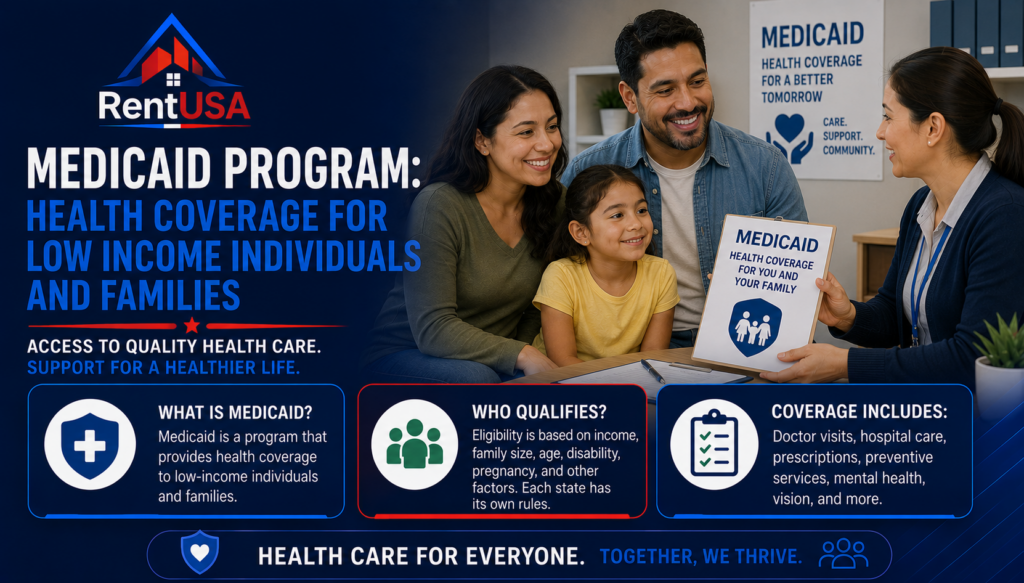
The CHIP Program provides healthcare assistance to children in families that earn too much to qualify for Medicaid but still need financial aid for medical coverage. As part of broader Government Assistance, CHIP helps ensure that low income children have access to necessary healthcare. This article explains how CHIP generally works.
👶 What Is CHIP?
The Children’s Health Insurance Program (CHIP) is a joint federal and state program that provides low-cost health coverage to children in families with incomes too high to qualify for Medicaid but who still need assistance affording private insurance. Like Medicaid, CHIP is administered by states within federal guidelines, so specific benefits and income limits vary.
🎯 Purpose of the Program
CHIP was created to close a coverage gap for children whose families earn modest incomes, ensuring access to preventive care, doctor visits, immunizations, and other essential health services during childhood.
📋 Who May Qualify?
Age Requirements
CHIP generally covers children up to age 19, though exact age limits can vary slightly by state.
Income Requirements
Eligibility is based on household income falling within a range set by the state, typically above Medicaid limits but below a higher CHIP threshold.
Citizenship and Residency
Children generally must be U.S. citizens or have an eligible immigration status and reside in the state where the family applies.
Existing Coverage
In many states, children must be uninsured or have limited access to other affordable coverage to qualify for CHIP.
🩺 Benefits Offered
CHIP typically covers routine check-ups, immunizations, doctor visits, hospital care, dental and vision care, and prescription medications, though specific benefits vary by state program design.
📝 How the Application Process Generally Works
1. Apply Through the State CHIP or Medicaid Agency
Many states use a combined application for Medicaid and CHIP, often available online, by mail, or in person.
2. Provide Documentation
Applicants typically need to provide proof of income, identification, and information about the child’s current insurance status.
3. Eligibility Determination
The state reviews the application to determine whether the child qualifies for CHIP or Medicaid based on household income.
4. Coverage Enrollment
Once approved, families typically receive information about selecting a health plan, if applicable in their state.
🔄 Renewal Requirements
CHIP coverage generally requires annual renewal, during which families must confirm continued income eligibility.
⚠️ Common Reasons for Denial
Applications may be denied if household income exceeds the state’s CHIP threshold, the child already has qualifying health coverage, or documentation is incomplete.
💡 Tips Before Applying
Families may benefit from applying even if they are unsure whether their income qualifies for Medicaid or CHIP, since applications are often reviewed for both programs simultaneously, and gathering income documentation in advance to streamline the process.
❓ Frequently Asked Questions
Is there a monthly cost for CHIP coverage?
Some states charge modest premiums or copayments for CHIP, though costs are generally lower than private insurance and vary by state and income level.
Can CHIP cover pregnant women?
Some states extend CHIP eligibility to pregnant women through a specific coverage option, though this varies by state.
Does CHIP replace the need for Medicaid?
No. CHIP and Medicaid serve different income ranges, and children are generally directed to the appropriate program based on household income.
Where Can You Learn More About This Program? 📌
If you would like additional information about this assistance program, eligibility requirements, application procedures, or current updates, you should consult the official source.
Learn more by visiting the official website: