Transitional Housing Programs offer temporary, supportive housing for individuals and families working toward long-term stability. As part of broader Housing Assistance and Government Assistance efforts, these programs combine shelter with services designed to help residents move toward permanent housing. This article explains how transitional housing generally works.
🚪 What Is Transitional Housing?
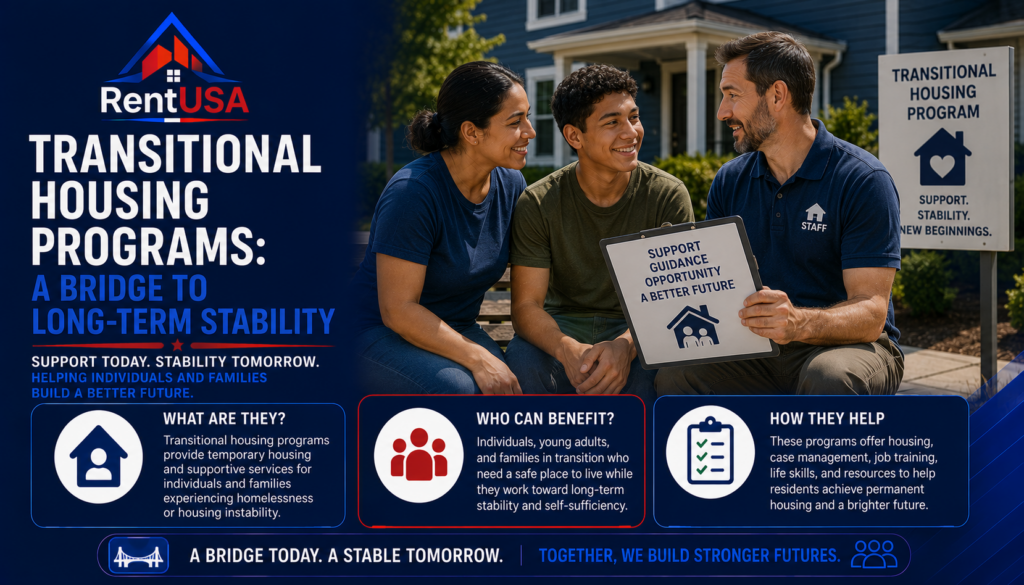
Transitional housing provides temporary living arrangements, typically lasting anywhere from a few months up to two years, combined with supportive services such as case management, job training, and counseling. These programs often serve individuals and families experiencing homelessness, survivors of domestic violence, veterans, or people exiting institutional settings.
🎯 Purpose of the Program
Transitional housing aims to provide a stable environment while residents address the underlying factors contributing to housing instability, such as employment barriers, mental health needs, or lack of a rental history. The ultimate goal is to help residents transition into permanent, independent housing.
📋 Who May Qualify?
Housing Status
Applicants are generally required to be experiencing homelessness or at significant risk of homelessness.
Special Populations
Many transitional housing programs are designed for specific groups, such as veterans, youth aging out of foster care, survivors of domestic violence, or individuals recovering from substance use disorders.
Willingness to Participate in Services
Because transitional housing is service-intensive, applicants are often expected to participate in case management, counseling, or employment services as a condition of continued residency.
🏠 Types of Transitional Housing
Programs commonly include congregate living facilities with shared common areas, scattered-site transitional housing in individual apartments, population-specific programs for veterans or domestic violence survivors, and youth-focused transitional living programs.
📝 How the Application Process Generally Works
1. Contact a Local Homeless Services Provider
Many communities use a Coordinated Entry system, which serves as a central point of access to homeless and transitional housing services.
2. Complete an Assessment
Applicants typically undergo an assessment to determine housing needs and the appropriate level of support.
3. Program Matching
Based on the assessment, individuals may be referred to a specific transitional housing program suited to their situation.
4. Case Planning
Once enrolled, residents generally work with a case manager to set goals related to employment, income, and eventual permanent housing.
📑 Documents Commonly Requested
Applicants are often asked for identification, documentation of homelessness or housing instability, and information related to income and any specific eligibility category, such as veteran status.
⚠️ Common Reasons for Denial
Placement may be denied due to lack of available space, not meeting a program’s specific population criteria, or safety concerns identified during the intake assessment.
💡 Tips Before Applying
Individuals may benefit from connecting with a local Coordinated Entry access point as a first step, being prepared to discuss their housing history and needs openly during the assessment, and staying in contact with assigned case managers throughout the process.
❓ Frequently Asked Questions
How long can someone stay in transitional housing?
Length of stay varies by program but often ranges from a few months to about two years, depending on individual circumstances and program design.
Is transitional housing the same as emergency shelter?
No. Emergency shelters typically provide very short-term stays, while transitional housing offers a longer period combined with structured supportive services.
Does transitional housing guarantee permanent housing afterward?
No. Transitional housing is designed to help residents prepare for permanent housing, but securing a specific unit afterward is not guaranteed.
Where Can You Learn More About This Program? 📌
If you would like additional information about this assistance program, eligibility requirements, application procedures, or current updates, you should consult the official source.
Learn more by visiting the official website: