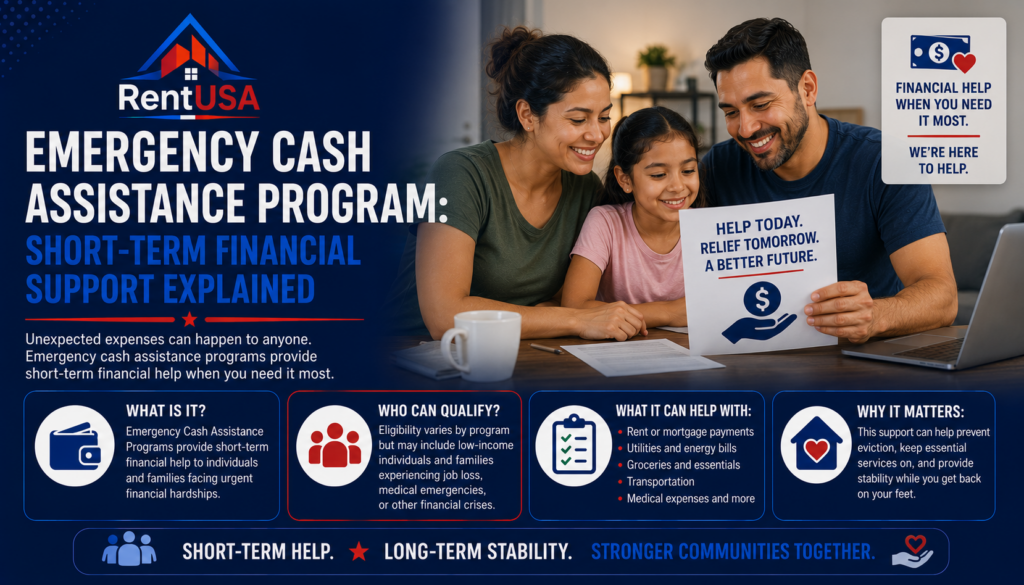
The Emergency Cash Assistance Program provides short-term financial aid to individuals and families facing sudden hardship. As part of broader Government Assistance resources, this type of support helps low income households cover urgent expenses when unexpected circumstances arise. This article explains how emergency cash assistance generally works across the United States.
🚨 What Is Emergency Cash Assistance?
Emergency cash assistance refers to short-term, often one-time, financial support intended to help households manage a sudden crisis, such as job loss, a medical emergency, a natural disaster, or an unexpected bill. These programs are typically administered at the state or county level, sometimes in coordination with nonprofit organizations.
🎯 Purpose of the Program
The goal of emergency cash assistance is to prevent a temporary financial setback from escalating into a longer-term crisis, such as eviction, utility shutoff, or loss of transportation needed for employment. It is generally intended as a bridge, not an ongoing source of income.
📋 Who May Qualify?
Income Requirements
Eligibility is often based on household income falling below a state or locally defined threshold, sometimes tied to federal poverty guidelines.
Demonstrated Emergency
Applicants generally must show evidence of a qualifying emergency, such as a layoff notice, medical bill, eviction notice, or disaster-related loss.
Residency
Most programs require applicants to reside in the state or county administering the assistance.
Household Composition
Some programs prioritize households with children, elderly members, or individuals with disabilities.
💵 Types of Emergency Assistance
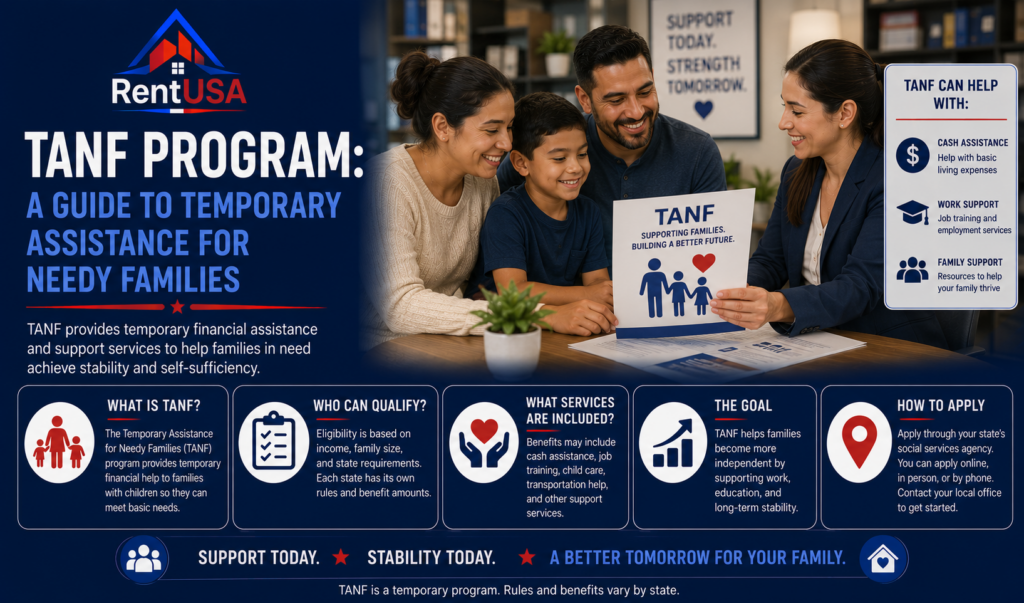
Support commonly includes one-time cash grants for urgent needs, emergency rental or mortgage assistance, utility shutoff prevention funds, and disaster relief payments following federally declared emergencies. Some states also offer emergency assistance specifically through their TANF programs for qualifying families.
📝 How the Application Process Generally Works
1. Identify the Administering Agency
Emergency assistance may be handled by a state human services department, a county office, or a local nonprofit, so it helps to confirm which agency covers a specific type of emergency.
2. Document the Emergency
Applicants typically need to provide evidence of the hardship, such as a notice of eviction, shutoff notice, or unemployment documentation.
3. Submit an Application
Applications can often be completed online, in person, or by phone, depending on the agency.
4. Expedited Review
Because these situations are time-sensitive, many programs aim to process applications faster than standard benefit programs.
📑 Documents Commonly Requested
Applicants are often asked for photo identification, proof of income, evidence of the emergency situation, and information about household members.
⚠️ Common Reasons for Denial
Requests may be denied due to insufficient documentation of the emergency, income exceeding program limits, previous use of the same emergency benefit within a limited timeframe, or exhausted program funding.
💡 Tips Before Applying
Applicants may benefit from applying as soon as an emergency arises, since funding is often limited, keeping all relevant documentation organized, and contacting local 211 helplines, which can direct individuals to the appropriate emergency assistance resources in their area.
❓ Frequently Asked Questions
Is emergency cash assistance a loan that must be repaid?
Typically no, most emergency cash assistance is a grant rather than a loan, though applicants should confirm terms with the specific program administering the aid.
Can I apply for emergency assistance more than once a year?
This depends on the specific program; many have limits on how frequently a household can receive this type of aid.
Does emergency assistance guarantee funds will be available?
No. Emergency assistance programs often operate with limited funding, and approval is not guaranteed even if eligibility criteria are met.
Where Can You Learn More About This Program? 📌
If you would like additional information about this assistance program, eligibility requirements, application procedures, or current updates, you should consult the official source.
Learn more by visiting the official website: