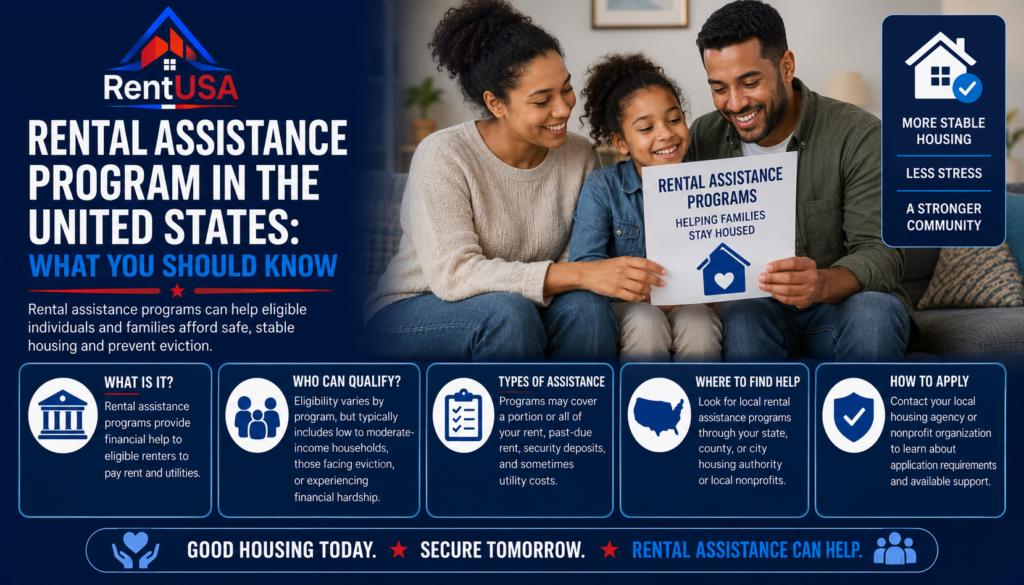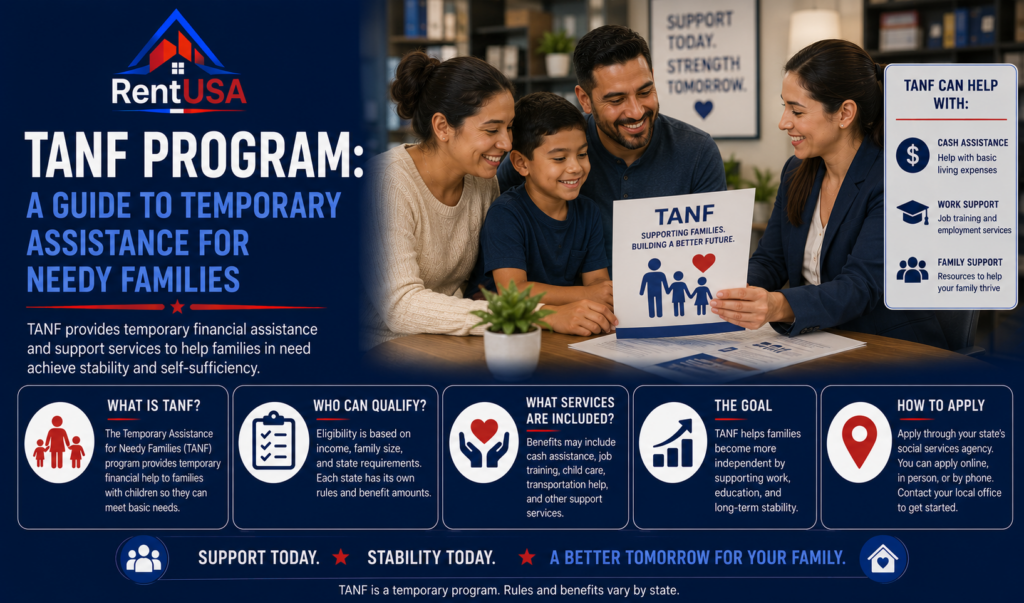
Finding housing assistance options that don’t require a large upfront payment can be a major relief for low income renters. Rental Without Security Deposit arrangements and deposit-assistance programs are increasingly available across the United States, offering a path to housing without the traditional financial barrier.
🔑 What Does “Rental Without Security Deposit” Mean?
This term generally refers to two related concepts: landlords who waive or reduce the traditional security deposit requirement, often in exchange for a monthly non-refundable fee or deposit insurance, and government or nonprofit programs that provide security deposit assistance so renters do not have to pay the deposit out of pocket. Both approaches aim to reduce the upfront cost of moving into a new rental unit.
🎯 Purpose of Deposit Assistance Programs
Security deposits can range from several hundred to several thousand dollars, which can be a significant barrier for individuals with limited savings. Deposit assistance programs and deposit-free rental options aim to reduce this barrier and support housing stability, particularly for individuals transitioning out of homelessness, survivors of domestic violence, veterans, and other vulnerable populations.
📋 Who May Qualify?
Income Requirements
Many deposit assistance programs are targeted at low or extremely low-income households, often based on Area Median Income limits.
Housing Status
Some programs prioritize individuals who are homeless, at risk of homelessness, or being discharged from institutional settings such as hospitals or correctional facilities.
Special Populations
Certain programs are specifically designed for veterans, survivors of domestic violence, or families involved with child welfare systems.
💰 Types of Assistance Available
Support in this area commonly includes government or nonprofit grants that cover part or all of a security deposit, deposit guarantee programs where an organization backs the deposit instead of the renter paying it directly, landlord deposit waiver programs that allow monthly payment plans in place of a lump sum, and rental deposit loan programs offered by some local agencies.
📝 How the Application Process Generally Works
1. Identify Local Resources
Assistance is often administered by local housing authorities, nonprofit organizations, or faith-based groups, so availability varies by location.
2. Verify Eligibility
Applicants typically need to demonstrate income level and housing need through documentation.
3. Submit an Application
Applications may require proof of a pending lease agreement, identification, and income verification.
4. Coordination With the Landlord
In many cases, the assisting organization pays the landlord directly or provides a formal guarantee on the renter’s behalf.
📑 Documents Commonly Requested
Applicants are often asked for a valid photo ID, proof of income, a signed or pending lease agreement, and in some cases, documentation of housing instability or special eligibility category.
⚠️ Common Reasons for Denial
Requests may be denied due to insufficient documentation, income exceeding program limits, lack of available program funding, or failure to meet a program’s specific target population requirements.
💡 Tips Before Applying
Renters may benefit from contacting local housing nonprofits early, since funding is often limited and distributed on a first-come, first-served basis, and from asking landlords directly whether they participate in any deposit alternative programs.
❓ Frequently Asked Questions
Are deposit-free rentals available everywhere?
Availability varies significantly by location and depends on local landlord participation and program funding.
Does deposit assistance mean free rent?
No. Deposit assistance only addresses the upfront deposit; renters remain responsible for ongoing monthly rent unless enrolled in a separate rental assistance program.
Is approval guaranteed?
No. Each program has its own eligibility criteria and limited funding, so approval is not guaranteed.
Where Can You Learn More About This Program? 📌
If you would like additional information about this assistance program, eligibility requirements, application procedures, or current updates, you should consult the official source.
Learn more by visiting the official website: