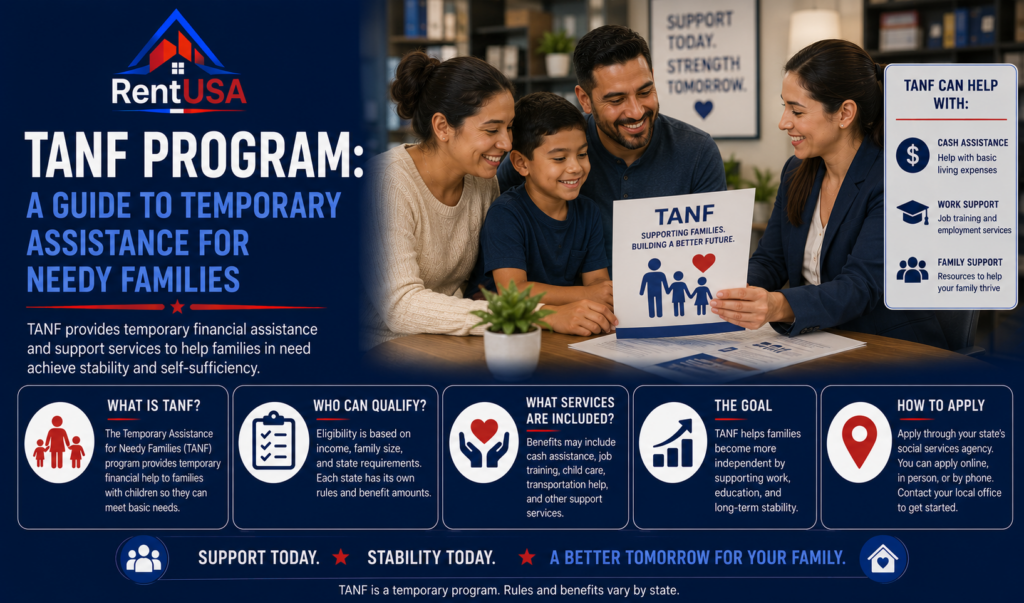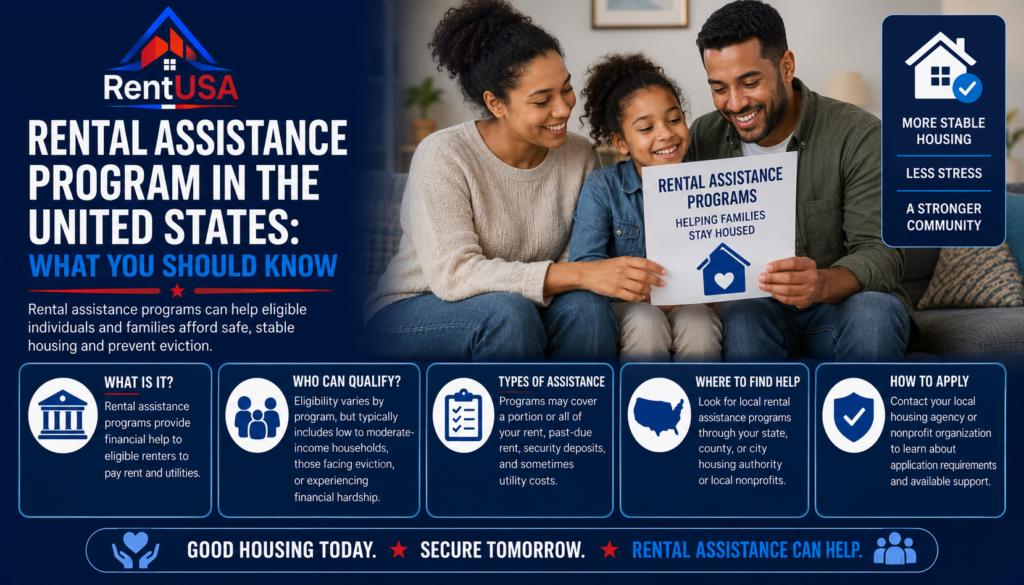
Government Assistance programs continue to play a critical role in helping families across the United States maintain stable housing. For many low-income households, Rental Assistance can mean the difference between staying in their home and facing housing instability.
🏠 What Is the Rental Assistance Program?
The Rental Assistance Program refers to a group of federal, state, and local initiatives designed to help low income individuals and families afford safe and stable housing. These programs are typically administered through the U.S. Department of Housing and Urban Development (HUD), state housing finance agencies, and local Public Housing Authorities (PHAs), sometimes in partnership with nonprofit organizations.
The main goal of this public assistance is to reduce the financial burden of rent so households can allocate more of their income toward other essential needs, such as food, healthcare, and transportation. Depending on the specific program, assistance may come in the form of direct rental subsidies, emergency rental payments, or vouchers that reduce the amount a tenant pays out of pocket.
📋 Who May Qualify for Rental Assistance?
Eligibility requirements vary by program and location, but most rental assistance initiatives consider several common factors:
Income Requirements
Most programs set income limits based on the Area Median Income (AMI) for the county or metropolitan area where the applicant lives. Households are often categorized as extremely low income, very low income, or low income, and these categories determine the level of assistance available.
Residency Requirements
Applicants generally must reside in the state or locality administering the specific program. Some programs are limited to residents of a particular city or county.
Household Composition
Family size is factored into both the income limits and the amount of assistance a household may be eligible to receive.
Citizenship or Immigration Status
Federally funded programs typically require that at least one household member be a U.S. citizen or have an eligible immigration status, as defined by HUD guidelines.
💰 Types of Rental Assistance Available
There are several forms of rental assistance offered across the country, and understanding the differences can help applicants identify which option may fit their situation:
- Housing Choice Vouchers (Section 8): Tenant-based vouchers that subsidize a portion of rent paid to a private landlord.
- Emergency Rental Assistance: Short-term aid intended to prevent eviction due to a temporary financial hardship.
- Public Housing: Government-owned housing units offered at reduced rent to eligible households.
- Local and Nonprofit Rental Programs: Additional support offered by community organizations, often used to supplement federal benefits.
For example, a family facing a temporary job loss might qualify for emergency rental assistance to cover a few months of rent while they search for new employment, whereas a household with a consistently low income might be better suited for a long-term voucher program.
📝 How Does the Application Process Generally Work?
While specific steps differ by agency, most rental assistance applications follow a similar general process:
1. Research the Right Program
Applicants should identify whether the assistance is administered by HUD, a state housing agency, or a local PHA, since each may have its own application system.
2. Gather Required Documentation
Common documents requested include proof of identity, proof of income (such as pay stubs or tax returns), proof of residency, and Social Security numbers for household members.
3. Submit the Application
Applications can often be submitted online, by mail, or in person, depending on the administering agency.
4. Application Review
Agencies review submitted information to verify eligibility, which may include income verification and background checks related to housing history.
5. Waiting List Placement
Because demand often exceeds available funding, many programs maintain a waiting list. Wait times can vary significantly depending on the region and program.
📑 Documents Commonly Requested
Preparing documentation in advance can make the process smoother. Applicants are commonly asked to provide:
- Government-issued photo identification
- Social Security cards for all household members
- Proof of income (pay stubs, benefit letters, tax returns)
- Proof of current address
- Bank statements, in some cases
⚠️ Common Reasons for Denial
Applications may be denied or delayed for several reasons, including incomplete documentation, income exceeding program limits, failure to respond to agency requests within the specified timeframe, or a prior negative rental history in certain programs. Reviewing eligibility guidelines carefully before applying can help reduce the likelihood of these issues.
💡 Tips to Improve the Application Process
Applicants may find it helpful to keep copies of all submitted documents, respond promptly to any requests from the housing authority, update contact information if it changes while on a waiting list, and confirm eligibility requirements directly with the administering agency before applying, since guidelines can change periodically.
🔗 Other Related Government Programs
Households seeking rental assistance may also want to learn about related forms of benefits, such as utility bill assistance programs, emergency cash assistance, and food assistance programs like SNAP. These programs are often administered by different agencies but can complement housing-related support.
❓ Frequently Asked Questions
Is Rental Assistance the same in every state?
No. While many programs are federally funded, implementation, income limits, and waiting list procedures can vary by state and locality.
How long does it take to receive assistance?
Processing times vary widely. Some emergency programs offer faster turnaround, while voucher-based programs may involve longer waiting periods due to high demand.
Can I apply for more than one rental assistance program at a time?
In many cases, yes, applicants may apply to multiple programs, though rules vary by agency and applicants should confirm this with each administering organization.
Does rental assistance guarantee approval?
No. Eligibility is determined case by case, and meeting general requirements does not guarantee approval or benefit availability.
Where Can You Learn More About This Program? 📌
If you would like additional information about this assistance program, eligibility requirements, application procedures, or current updates, you should consult the official source.
Learn more by visiting the official website: